
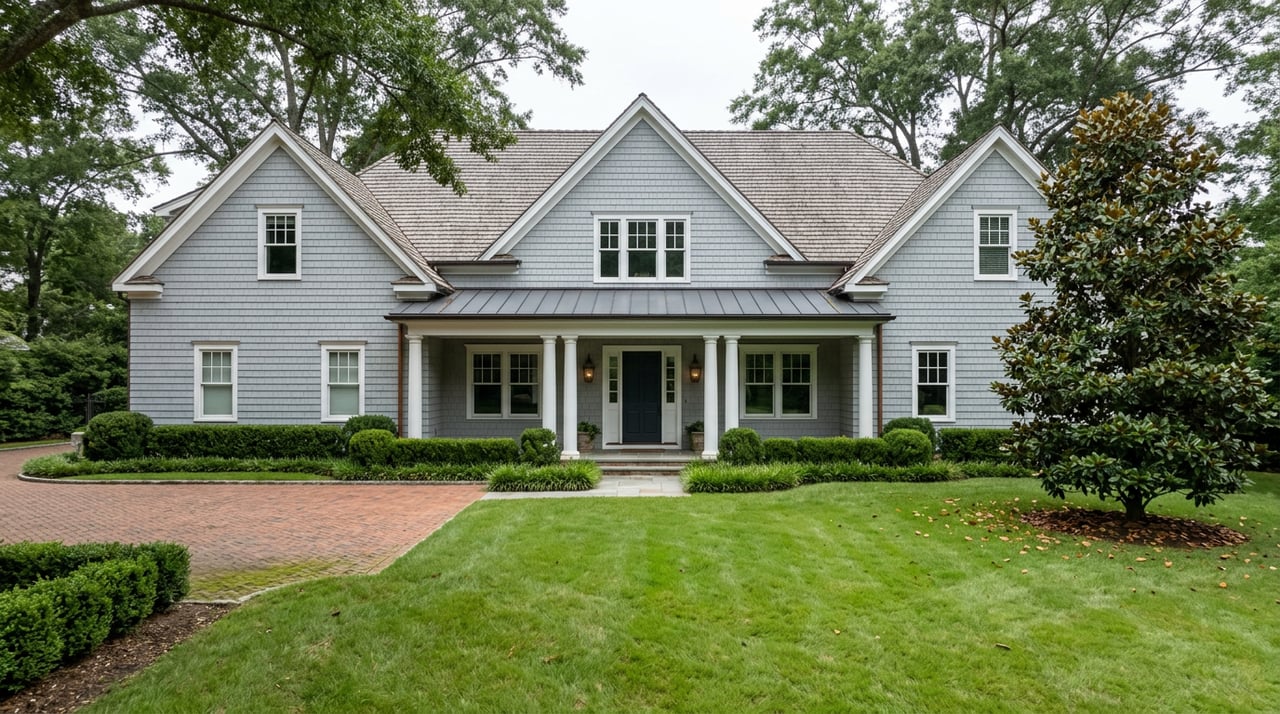
If you're touring homes east of Cooper Sandy Creek Road in Milton this month, your agent has probably already warned you about Freemanville Road. The closure runs from late May through October 2026, and it has added five to ten days to the average time a home in that pocket sits on the market, simply because showings now have to reroute around it. That kind of detail never shows up in a portal search. It shows up when you're standing in a driveway wondering why the buyer before you walked away.
That closure is a small, temporary friction. The bigger question buyers ask once they've looked at a few listings is less about road construction and more about math: why does a home in Milton cost so much more than a nearly identical one a few miles south in Alpharetta, or a few miles further in Roswell? Lot size and schools aren't the whole answer, even though both get blamed. A big part of the answer is who is actually competing for these houses, and that changes how you should read every number on a listing sheet.
Roswell homes typically trade in the $550,000 to $650,000 range. Alpharetta runs $700,000 to $800,000. Johns Creek sits around $700,000. Milton runs anywhere from 50 to 90 percent above those neighboring cities, depending on which slice of the market you're comparing.
That's not a small premium. It's the difference between treating Milton as "the nicer part of Alpharetta" and treating it as a genuinely separate market with its own buyer pool, its own pace, and its own rules for how a listing gets priced and sold.
Part of why this gap is confusing is that the sources don't agree with each other, and for good reason. One tracker puts Milton's average home value just under $960,000 as of July 2026, up a modest 2.7 percent over the year. Another puts the average sale price above $1.28 million, up 45 percent. A third puts the 12-month median at $1.45 million, up 16 percent. These aren't contradictions so much as evidence that the mix of homes selling has shifted. When a wave of new construction in the $1.5 million-plus range closes in the same window as a handful of older resale homes near $700,000, the average and the median move in ways that have nothing to do with any single house appreciating. If you're using a single number from a single site to decide whether Milton is "still going up," you're reading noise, not signal.
The premium holds because three separate factors compound rather than cancel out.
The first is zoning. Much of Milton sits under agricultural and large-lot designations that keep density low and lot sizes large compared to Alpharetta or Roswell. A Comprehensive Plan Update earlier this year revisited exactly these lot-minimum questions, and any future change to them would be one of the few things capable of loosening this part of the equation. For now, it hasn't changed, and it remains one leg of the premium.
The second, and the one buyers underestimate most, is who is actually bidding. The median household income in Milton's 30004 zip code runs around $172,000, putting it in the top decile nationally. A buyer pool at that income level doesn't flinch at a 6 or 7 percent mortgage rate the way a median U.S. household does. That matters right now specifically: Freddie Mac's Primary Mortgage Market Survey put the 30-year fixed rate at 6.76 percent as of September 10, 2026, and it has drifted higher since. In most markets, a rate like that cools demand. In Milton, it barely registers, because a meaningful share of buyers are paying largely with equity from a prior sale or writing checks that don't depend on the rate at all. Milton's price track has tended to follow local income growth and available inventory more closely than it follows the Fed.
The third is the age of the housing stock doing the selling. New construction from 2024 through 2026 is moving faster than 1990s-era subdivision homes at comparable price points, because a buyer paying $1.5 million or more for a home in Milton generally isn't signing up to spend the next two years renovating a kitchen. That preference pulls price and speed toward newer product and leaves older homes to compete on price cuts instead.
Here's the part that changes how you should shop or price a listing. Milton isn't one market moving at one speed. It splits sharply by price band and by school zone.
Homes in the Cambridge High School zone priced under $1.8 million have been closing in 20 to 30 days, a genuinely fast pace for this price range. Homes above $3 million are a different story entirely, often sitting 60 days or more as the pool of qualified buyers thins out. A median days-on-market figure sitting somewhere in the 30s or 40s across the whole city is technically accurate and practically useless, because it's averaging a market that's brisk at one end and slow at the other.
| City | Typical price range, 2026 |
|---|---|
| Roswell | $550,000 to $650,000 |
| Alpharetta | $700,000 to $800,000 |
| Johns Creek | around $700,000 |
| Milton | 50 to 90 percent above the above, depending on price band and school zone |
If you're comparing Milton to Alpharetta using a single median number from either city, you're not comparing like products. You're comparing a fast-moving sub-$1.8 million tier in one city to whatever happens to be listed in the other that week. The useful comparison is band to band and zone to zone, not city to city.
New construction is where this gets trickiest for a buyer trying to figure out the real cost of a home, because builders in the Alpharetta-Milton corridor have leaned hard on financing incentives this year rather than cutting sticker prices. Earlier in 2026, some communities advertised first-year rates as low as 2.78 percent for a limited window, others offered $50,000 that a buyer could apply either to a straight price reduction or to buying down their permanent rate, tied to a specific closing deadline.
The mechanism matters more than any single offer, since these deals rotate on and off every few weeks. A teaser rate or a buydown credit isn't free money. It's either baked into a slightly higher base price than the builder would otherwise need to charge, or it's a genuine temporary discount that reverts to a market rate like the 6.76 percent Freddie Mac reported in September after the first year or two. Either way, the headline number on the sign in the yard is not the number you should use to compare a new-construction home in Milton against a resale home in Alpharetta. You need the actual amortized monthly payment under the real rate you'll carry for most of the loan, not the promotional rate that got you in the door.
This is also where a pre-drywall inspection and a second inspection days before closing earn their keep on any new build, incentive or not. Someone reviewing your contract, your upgrade list, and your inspection results should be working for you.
The Milton premium is real, and it isn't going away because of one rate cycle or one zoning meeting. But it isn't a flat tax on every home in the city either. Where you land inside that premium depends on which school zone you're in, whether you're buying new or resale, and how a road closure or a construction deadline happens to be affecting showings on the specific street you're watching. Those are the details worth asking about before you compare a listing price against anything you saw on a national portal.
If you're weighing Milton against Roswell, Alpharetta, or Johns Creek and want the comparison run against your actual price band and school zone rather than a citywide average, Margaret Sallee can walk through the current numbers with you and help you read what a specific listing's price is really telling you.
This article is general information, not legal, tax or financial advice. Consult a qualified professional about your situation.
Whether buying or selling, Margaret represents each of her clients with a high degree of professionalism and personalized care that delivers optimal results.